7 GEO Trends That Will Define AI Search in 2026
Discover the 7 critical Generative Engine Optimization trends reshaping how brands get discovered in AI-powered search. From entity-based knowledge to new success metrics.


The way people find information is fundamentally changing. With AI Overviews reaching over 1.5 billion monthly users and ChatGPT processing 72 billion messages per month, traditional search rankings are no longer the only game in town.
Experts predict search volumes could drop by 25% by 2026 as more users turn to zero-click AI answers. For marketers, this isn't a threat—it's an opportunity to get ahead of the curve with Generative Engine Optimization (GEO).
Here are the 7 trends that will define AI search visibility in 2026.
1. Topic Targeting Over Keywords
The biggest shift in GEO is moving from keyword targeting to topic targeting. While traditional SEO obsesses over specific phrases like "best running shoes," generative engines care more about comprehensive topic coverage.
AI models synthesize information from multiple sources. They're looking for content that thoroughly covers a subject, not content stuffed with exact-match keywords.
What to do: Create pillar content that covers topics comprehensively. Instead of 10 thin articles targeting keyword variations, create one authoritative piece that answers all related questions.

2. Structured, Succinct Content
Generative engines don't produce lengthy lead-ups—they deliver summarized, synthesized information. Your content needs to match this format to get cited.
AI models extract facts, not fluff. Long-winded introductions and filler paragraphs get ignored. Clear hierarchies, bullet points, and scannable formats get cited.
What to do:
- Use clear H2/H3 hierarchies
- Lead paragraphs with the key fact
- Include summary sections and TL;DRs
- Format data in tables when possible
3. Brand Visibility Over Rankings
Here's a paradigm shift: generative engines don't operate on rankings. There's no "position 1" in an AI-generated response. Instead, the goal is getting your brand cited or mentioned.
This means brand building matters more than ever. A well-known, frequently mentioned brand is more likely to appear in AI responses than an unknown site with perfect on-page SEO.
What to do: Invest in digital PR, thought leadership, and brand mentions across the web. Every mention strengthens your entity in AI knowledge graphs.
4. Entity-Based Knowledge
Modern AI maps entities, relationships, and context—not keywords. When you define entities clearly and demonstrate their relationships, you enable AI systems to extract accurate, quotable facts.
Think of it this way: Google's Knowledge Graph has evolved. Now every major AI has its own understanding of entities—people, companies, concepts, and how they relate.
What to do:
- Define your brand entity clearly (what, who, why)
- Use schema markup for organization, people, products
- Build consistent entity information across all platforms
- Create content that shows relationships between concepts

5. AI Search Performance Tracking
As GEO becomes a legitimate traffic channel, you need tools to measure it. Traditional rank trackers don't capture AI visibility.
New platforms are emerging to fill this gap. EZEO tracks visibility across 6 major AI platforms including Google AI Overviews, ChatGPT, Claude, Perplexity, Gemini, and Reddit sentiment. Other tools like Otterly.ai and Rankscale focus on specific aspects of AI visibility.
What to do: Set up AI visibility tracking now. Establish baselines for:
- Which AI platforms mention your brand
- How often you're cited vs. competitors
- What topics trigger your brand mentions
6. New Success Metrics
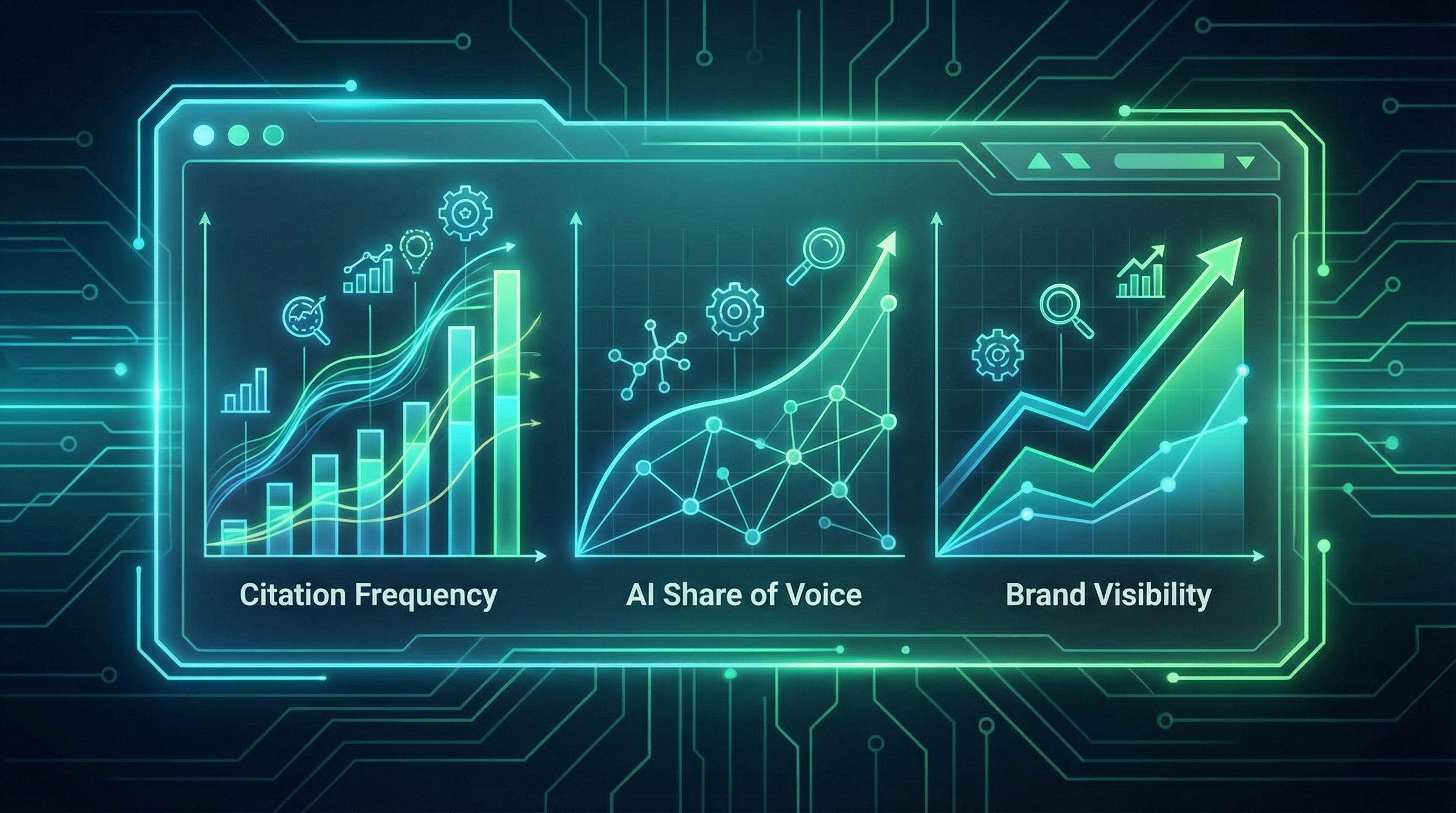
Forget CTR and traditional rankings. GEO introduces new metrics that actually matter:
- Citation Frequency: How often AI responses cite your content
- Brand Visibility: How prominently your brand appears in AI answers
- AI Share of Voice: Your presence relative to competitors in AI responses
- Sentiment Score: How AI platforms characterize your brand
These metrics require new measurement approaches. You can't just check your Google Search Console—you need dedicated AI visibility tracking.
What to do: Define your GEO KPIs and report on them monthly. Track Citation Frequency as your north star metric.
7. Social Signals for GEO
While social signals don't directly influence traditional search rankings, they play a crucial role in GEO. Large language models interpret your brand's real-time popularity, sentiment, and authority from social platforms.
Consistent engagement and topic-focused conversations create behavioral signals that generative engines use to assess credibility.
What to do:
- Maintain active presence on platforms where your audience discusses your topics
- Engage in conversations, don't just broadcast
- Monitor brand sentiment on Reddit, Twitter/X, and LinkedIn
- Create shareable content that generates organic discussion
The Bottom Line
GEO isn't replacing SEO—it's expanding it. The good news is that most GEO best practices also strengthen traditional SEO: clear structure, authoritative content, strong brand presence, and entity optimization.
The brands that win in 2026 will be those that optimize for both search paradigms simultaneously. Start tracking your AI visibility now, restructure your content for citation-worthiness, and invest in brand building across the web.
The shift is happening whether you're ready or not. The question is: will your brand be cited, or invisible?